1 / 7 in World
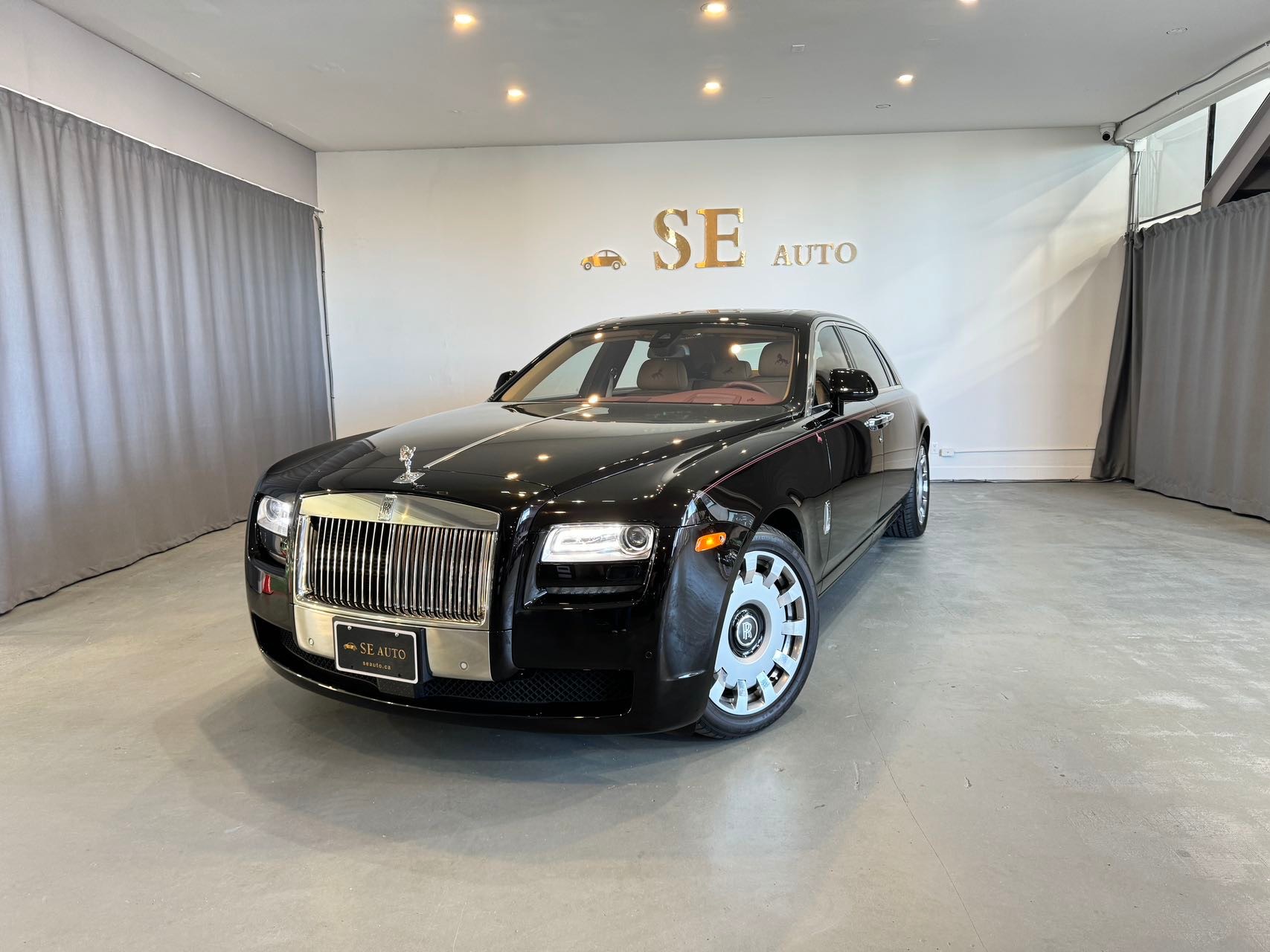
Rolls-Royce has just introduced a unique variant of the Ghost dubbed the Rolls-Royce Ghost Majestic Horse Edition. This limited series of motor cars perfectly marries Chinese artistic tradition to the very best in contemporary British automotive design. Highly discerning customers have a profound appreciation of fine craftsmanship, with many delighting at travelling to the Home of Rolls-Royce in Goodwood, Under the hood, the Rolls-Royce Ghost Majestic Horse Edition is fitted with the same engine as the standard Ghost. That is a 6.6-liter twin-turbocharged V12 engine mated to an eight-speed ZF automatic transmission and producing 563 hp!
The collection has been released in time for the Year of the Horse, according to the Chinese Zodiac, which is being celebrated in 2014. The convergence of two key themes of this highly auspicious year can be seen in the dashboard’s hand-crafted marquetry. In traditional Chinese culture, an ‘element’ is celebrated in conjunction with an animal. For the first time in over half a century, the element ‘wood’ and the horse are marked in the same year.
Highly discerning customers have a profound appreciation of fine craftsmanship, with many delighting at travelling to the Home of Rolls- Royce in Goodwood, Under the hood, the Rolls- Royce Ghost Majestic Horse Edition is fitted with the same engine as the standard Ghost. That is a 6.6-liter twin-turbocharged V12 engine mated to an eight-speed ZF automatic transmission and producing 563 hp.
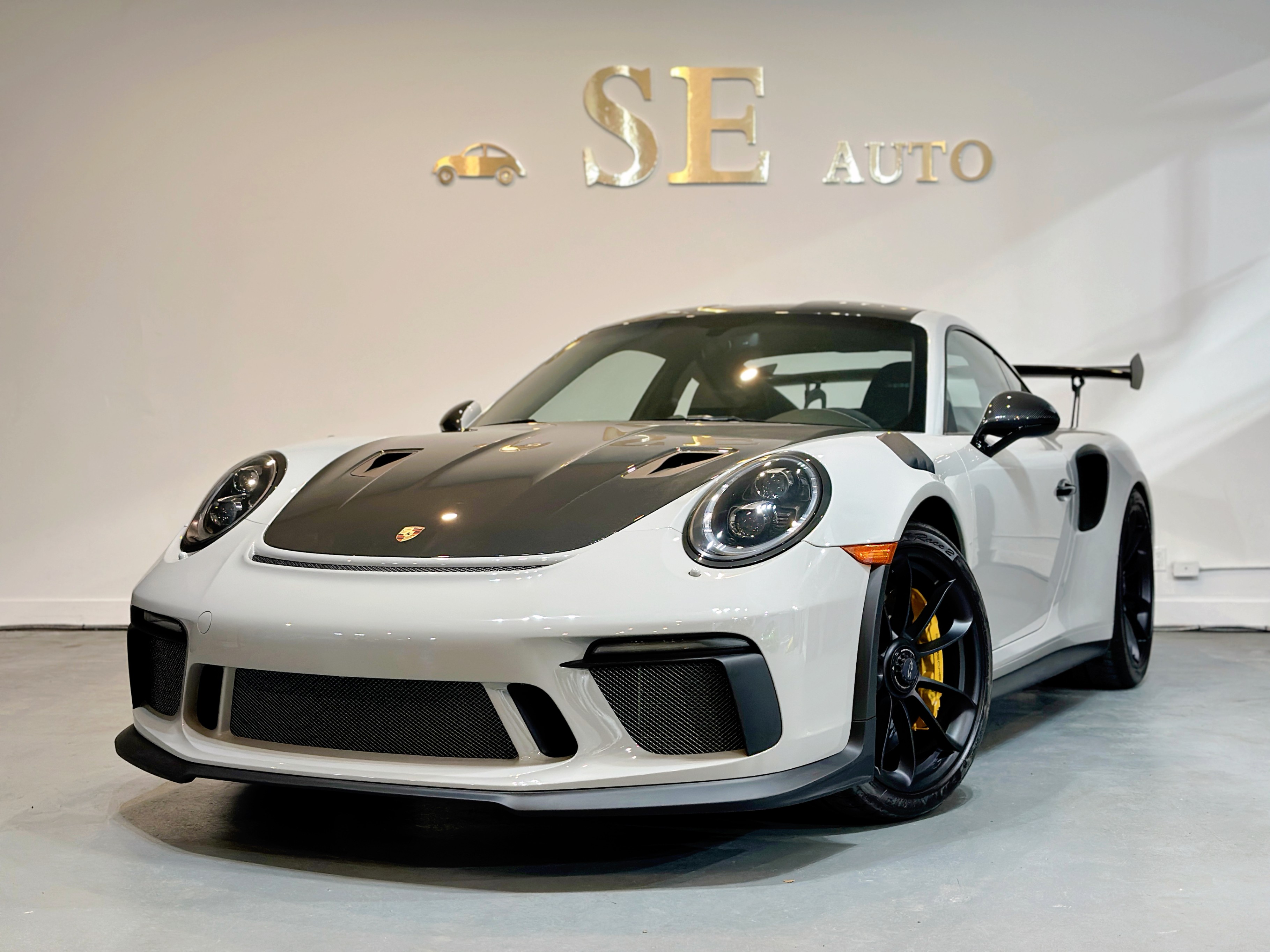
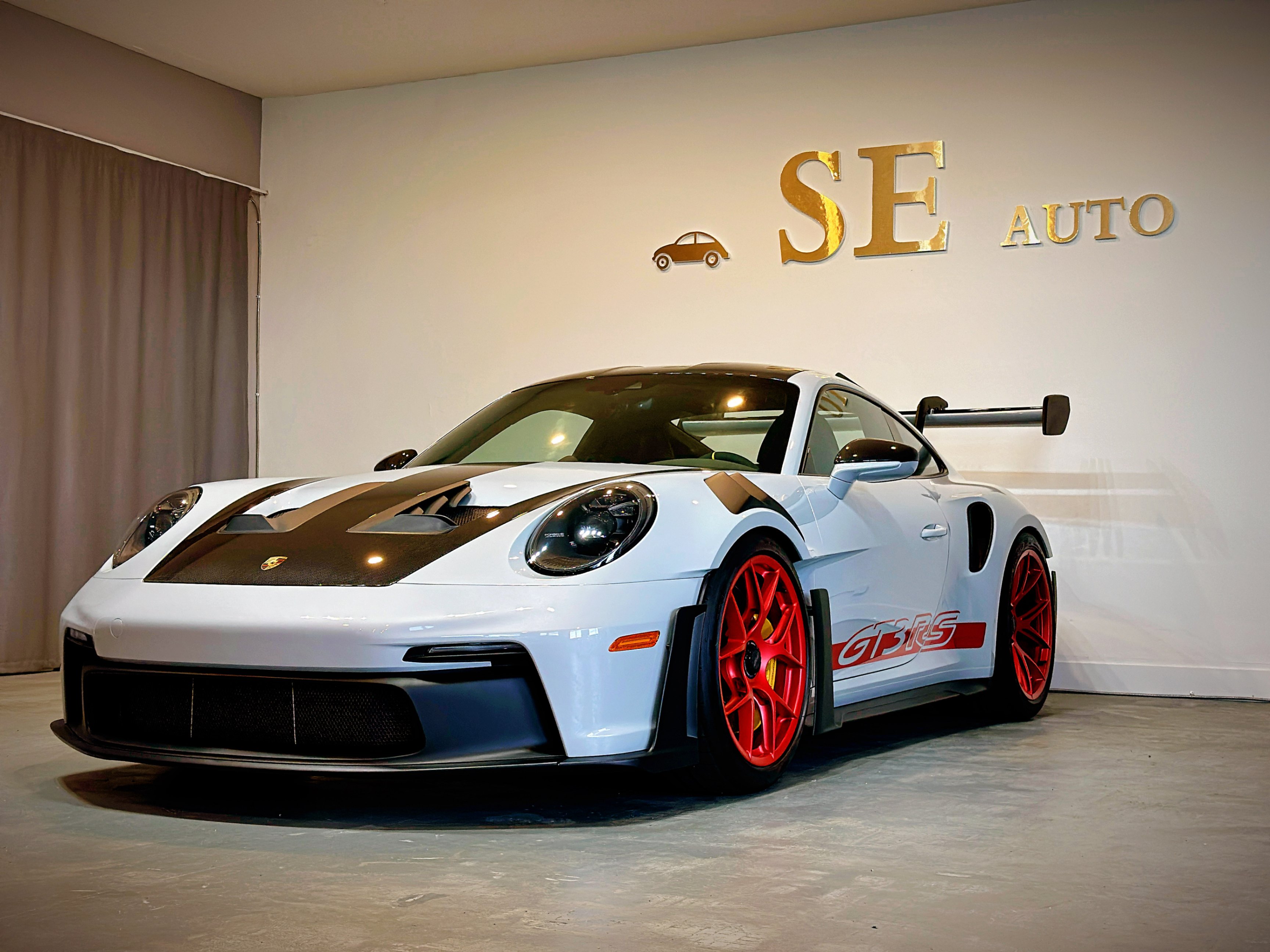
For a car that occupies such a tiny niche within a niche within the vast 911 family, the Porsche 911 GT3 RS sure has become a massive thing.
The RS’s carbon-fiber fixed rear wing has grown to near-ridiculous dimensions; each recent generation has seen it become more conspicuous, the struts on which it’s mounted pushing the wing farther into the clear air. The body has swelled in every direction to the point that, piloting the car along the narrow paths that serve as roads on the Isle of Man, the new RS’s 74.0-inch width makes it feel as if it’s taking up three-quarters of the surface. So be mindful around those blind corners. The displacement of its naturally aspirated engine has increased over the years to 4.0 liters (up from the 2.7 of the original RS from 1973). The engine in the last-generation GT3 RS from 2016 also displaced 4.0 liters, but for 2019 the unit is substantially updated and awarded 20 more horsepower, for a total of 520.
Depending on your perspective, the RS engine gets a 20-hp boost compared to the standard 911 GT3 or the GT3 gets a 20-hp haircut compared to the RS. The engines are almost identical. Both receive new pistons and rings, a solid valvetrain with shims for valve-clearance compensation (in place of hydraulic adjustment), a stiffer crankshaft with larger main bearings, wider and thicker connecting-rod bearings, and plasma-coated cylinder liners. Compared with the last RS, Porsche also bumped up the compression ratio, from 12.9:1 to 13.3:1. The 20-hp gap between the current GT3 and the GT3 RS comes down to electronics and a different exhaust system. The RS’s exhaust also gets titanium tailpipes, the inside of which turn the loveliest cobalt blue from prolonged exposure to heat. The car sounds so good at higher revs—you can twist the engine to 9000 rpm—that we let out a completely unintentional “Whoo!” once we reached the upper reaches of the tach, and our co-driver had to remind us to back out because of a quickly approaching corner. It’s that fantastic.
That extra power, we estimate, chops a whopping 0.1 second off the previous GT3 RS’s zero-to-60-mph time. The last GT3 RS we tested did the deed in three seconds flat.
Not that this, or any other RS, is a drag racer. This is a track-day destroyer. Its cornering grip is, well, massive. We weren’t able to run numbers on the car, but we’re willing to venture a guess that it’ll score higher than the 1.08 g that we achieved with the last RS. That grip starts with a new generation of either Michelin Pilot Sport Cup 2 or Dunlop Sport Maxx Race 2 gumballs. Sized 265/35ZR-20 up front and 325/30ZR-21 at the rear, either tire is qualified for the track and acceptable on the road, assuming the weather is okay. The front and rear suspension systems use metal ball joints in place of all-rubber pieces (the last-generation RS retained some rubber up front). Stiffer front and rear springs quell body roll, despite the new RS’s less aggressive front anti-roll bar.
Athletes know: top performance requires more than perfect conditions and luck. Relentless training to become stronger and faster. Questioning everything, especially yourself. Learning from every mistake. Because the biggest challenge is to remain unbeatable. With this attitude,
The thing that makes modern Porsche sports cars so dang easy to love is that they come into their element no matter where or how you drive them. The same precision that makes a Porsche 718 or 911 brilliant on a rollicking two-lane creates a sense of control during a stressful commute. Want to use a sports car for a 2,000-mile road trip? For a relaxed Sunday cruise? To peacock down Rodeo Drive? Porsche abides.
The 2023 Porsche 911 GT3 RS is the exception to the rule. Drive it slowly or on a highway or in a city or with a non-car-crazed passenger riding shotgun, and it's kind of miserable. An order of magnitude stiffer than even the 911 GT3, the RS needs the right environment to reveal its superpowers. If there's a Michigan road that's both twisty enough and smooth enough to fully experience the 2023 Porsche 911 GT3 RS, this lifelong resident isn't aware of it, but that didn't make me any less enamored with the car. In a world where automakers can't stop blathering on about no-compromise vehicles, the newest GT3 RS is gloriously, unapologetically committed to doing a single thing—cracking off incomprehensibly fast lap times—at the expense of all others.
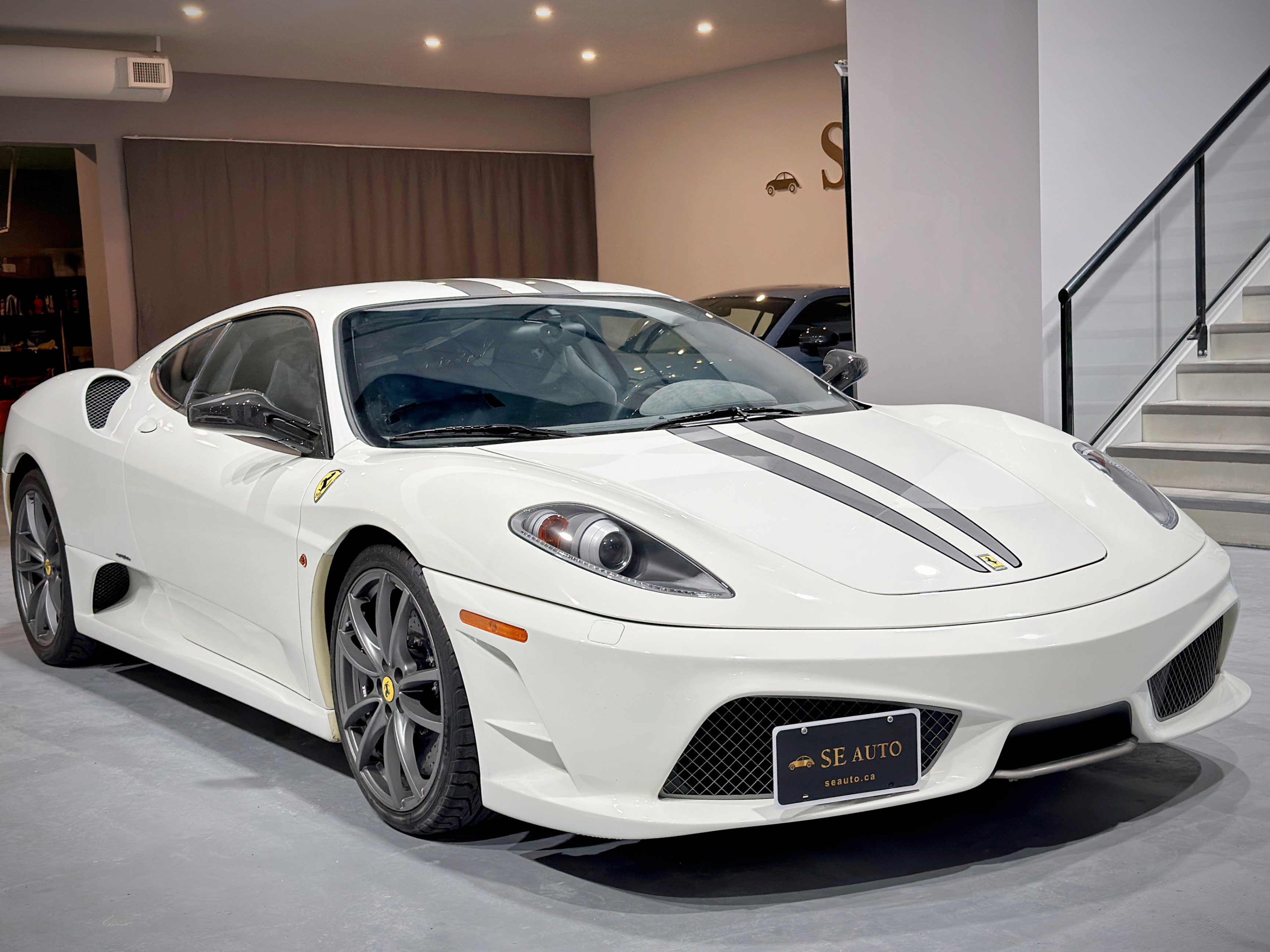
How much is enough? For many, the answer to that question is two words and a number: Ferrari 430 Scuderia. Three years into the F430 production run Michael Schumacher unveiled it at the 2007 Frankfurt show as the successor to the brilliant and now legendary 360 Challenge Stradale. The elements that made the 430 Scuderia (no ‘F’) special weren’t so much what it had but what it didn’t have. What it did have was a naturally aspirated 4.3-litre V8, a flat-plane crank development of the engine first seen in Maserati’s 4200 GT, also now featuring the Enzo’s clever valve timing system.
What it didn’t have were turbochargers, all-wheel drive systems and by virtue of all that, excess lard. Like the standard F430, the 430 Scuderia had the E-Diff electronic differential but there were significant differences elsewhere between the two cars, most but not all of them to do with weight reduction. We’ll get into more detail on that stuff in the Engine & Gearbox and Body sections, but at this stage let’s just throw in that the wheels were lightweight alloy, the engine cover Lexan rather than glass, and the brakes carbon ceramics rather than steel. Altogether the Scuderia weighed 100kg less than the standard 430. It had more power to boot, with the result that each of its hp had just 2.5kg to shift instead of nearly 3kg.
A year after the coupe came out, the Spider 16M convertible version was released. 16 referred to the number of F1 constructor’s championships Ferrari had won. In Ferrari land ‘M’ usually means Modificata, so we’re going with that. If you know different please put your answer on a postcard and then throw it away once you’ve seen the price of stamps these days.